

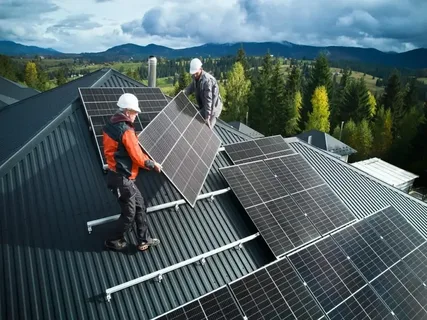
There’s a moment most Woodland Hills homeowners know all too well — you open your SoCal Edison bill in the middle of August, after two weeks of triple-digit heat, and the number staring back at you feels less like a utility charge and more like a punishment. You’ve heard the neighbors talking about solar. You’ve seen the panels going up on rooftops along Ventura Boulevard and deep into the West Hills communities. But the second you start researching solar installation companies, the process turns into a maze of technical jargon, wildly different price quotes, and salespeople who seem more interested in closing a deal than actually solving your energy problem.
That frustration is real, and it’s more common than most companies will admit. Choosing the right solar installer in Woodland Hills isn’t just about finding someone who can bolt panels to your roof. It’s about protecting a long-term investment, understanding the specific demands of the San Fernando Valley climate, and working with a company that has genuine roots in this community. Express Remodeling Inc has spent years helping homeowners across Woodland Hills and the surrounding areas navigate exactly this decision — and the insights below reflect what actually matters when you’re making one of the biggest energy decisions of your life.
Why Woodland Hills Homeowners Are Making the Switch Faster Than Ever
The Los Angeles Department of Water and Power recently confirmed what local homeowners have felt for years — electricity rates in Southern California continue climbing at a pace that outstrips inflation. For Woodland Hills specifically, sitting in a microclimate that regularly records some of the highest temperatures in the greater LA area, air conditioning costs during summer months can push monthly utility bills well past $400 for mid-sized homes.
Solar adoption in the 91364 and 91367 zip codes has accelerated significantly over the past two years, and it’s not hard to see why. California’s NEM 3.0 net energy metering policy changed the economics of going solar, making battery storage a smarter companion to panels than ever before. Homeowners who hesitate risk losing grandfathered rate structures and local incentive windows that won’t stay open indefinitely.
But urgency shouldn’t translate into rushed decisions. The companies you’re considering aren’t all operating at the same level of quality, licensing, or local knowledge — and the gap between a well-installed system that performs for 25 years and a poorly configured one that underdelivers within five can be enormous.
The Licensing and Certification Questions Most People Forget to Ask
Before you get into aesthetics, pricing, or brand names, the most important filter for any solar installation company in Woodland Hills is licensing. California requires solar contractors to hold a valid C-46 Solar Contractor license or a C-10 Electrical Contractor license issued by the California Contractors State License Board (CSLB). This isn’t a formality — it’s the minimum legal standard that protects you if something goes wrong during or after installation.
Beyond state licensing, ask whether the company employs NABCEP-certified installers. The North American Board of Certified Energy Practitioners certification is the gold standard in the solar industry, requiring documented field experience, rigorous testing, and continuing education. A company that can point to NABCEP-certified staff on your project is making a concrete commitment to technical quality, not just marketing language.
Express Remodeling Inc operates with full CSLB compliance and brings verifiable credentials to every project in Woodland Hills and throughout the West San Fernando Valley. That matters because the permit process in Los Angeles County is detailed, and an unlicensed or under-qualified contractor can leave you with an installation that fails city inspection — meaning you’re on the hook for costly corrections.
Understanding the Real Cost of Solar in Woodland Hills — Beyond the Quote Sheet
One of the most disorienting parts of getting solar quotes is the variance. You might receive estimates ranging from $18,000 to $32,000 for what appears to be the same system. That spread isn’t random — it reflects differences in equipment quality, installation practices, warranty terms, and company overhead that don’t always get explained during the sales pitch.
Here’s what experienced Woodland Hills homeowners eventually learn: the cheapest quote is rarely the best value, and the most expensive quote isn’t automatically the safest bet. What you’re actually evaluating is cost per watt, the quality tier of the panels and inverters, the comprehensiveness of the workmanship warranty, and whether the company will still be in business five years from now to honor it.
Tier-1 solar panels — those manufactured by companies with bankable financial ratings and proven long-term performance data — typically come with 25-year product and performance warranties. Budget installers often use Tier-2 or unrated panels to hit a lower sticker price, which can save a few thousand dollars upfront but introduce real performance risk over a decade.
Federal tax incentives remain a significant factor in 2026. The Residential Clean Energy Credit currently allows homeowners to deduct 30% of the total installation cost from their federal taxes. On a $25,000 system, that’s a $7,500 reduction in your actual out-of-pocket cost. A reputable solar installation company in Woodland Hills will walk you through this calculation honestly — not use it as a sleight-of-hand to make an overpriced system seem affordable.
Why Local Experience in the San Fernando Valley Changes Everything
The physics of solar installation are the same everywhere, but the practical realities are not. Woodland Hills sits in a geographic pocket that creates specific challenges a contractor unfamiliar with the area might overlook entirely.
Roof pitch and sun angle matter differently here than in coastal LA communities. Homes in the hills above Mulholland Drive often have complex rooflines with shading patterns that shift seasonally. A company that simply maximizes panel count without modeling actual annual sun exposure for your specific property is setting you up for underperformance — your system generates less energy than projected, and you never quite understand why.
Then there’s the wind. The Santa Ana winds that tear through the Woodland Hills area with particular intensity between October and January are not a minor consideration. Panel mounting systems need to be installed to specifications that account for sustained high-wind loads. The LA County building code has requirements here, but experienced local installers go beyond code minimum because they’ve seen what happens when systems are merely code-compliant but not built for real local conditions.
Red Flags That Reveal an Unreliable Solar Contractor
The solar industry, particularly in high-growth markets like Southern California, has attracted its share of operators who are more skilled at closing deals than delivering quality work. Here are the warning signs that experienced solar installation services in Woodland Hills homeowners have learned to recognize:
High-pressure same-day close tactics are the most common. A legitimate solar company will give you time to compare quotes, review contract terms, and consult with a financial advisor if needed. Anyone pushing you to sign that evening is prioritizing their commission, not your outcome.
Vague or missing workmanship warranties are another major concern. Equipment warranties from the panel and inverter manufacturers are standard. What separates good installers from mediocre ones is the workmanship warranty — coverage for roof penetrations, mounting, wiring, and labor. Industry-leading companies offer 10-year workmanship warranties. Anything less than five years should prompt hard questions.
No local physical address or only out-of-area contact information is a genuine risk factor. Out-of-state or fly-by-night companies have set up and dissolved within months after a wave of installations, leaving homeowners with no one to call for warranty service or system troubleshooting. A company with a real, established presence in the Woodland Hills area has reputational skin in the game.
Finally, watch out for companies that skip or minimize the site assessment. Proper solar installation services requires a roof inspection, a structural evaluation of load-bearing capacity, a shading analysis, and a review of your current electrical panel capacity. Any company that quotes you a system price without conducting these assessments is guessing — and you’re the one who pays for a wrong guess.
Battery Storage: The Decision Woodland Hills Homeowners Are Revisiting
A few years ago, most homeowners going solar in the West San Fernando Valley could rely on net metering to make a solar-only system financially sensible. Under NEM 3.0, that math has changed. The export rates utilities pay for energy sent back to the grid have dropped substantially, making battery storage a more compelling part of the equation for most households.
For Woodland Hills specifically, a home battery system isn’t just about economics. The area sits within a high fire threat district in LA County, and Public Safety Power Shutoff events during red flag conditions are a real and recurring disruption. A solar-plus-storage system keeps critical loads — medical equipment, refrigeration, communication devices — running through grid outages that can last 24 to 72 hours.
The Tesla Powerwall, Enphase IQ Battery, and Franklin WH series are among the most proven options for residential use in 2026, each with distinct advantages depending on your home’s size and load profile. A knowledgeable installer will model your actual consumption patterns and recommend storage capacity based on data, not default package bundles.
Express Remodeling Inc evaluates battery storage as part of a whole-home energy design conversation — because the right system for a 2,800-square-foot home in Woodland Hills with a pool and EV charger looks very different from the right system for a 1,400-square-foot condo, and that difference deserves a real answer, not a catalog page.
The Permit and Interconnection Process — What to Expect and Why It Takes Time
One of the most common sources of homeowner frustration in the solar installation process isn’t the installation itself — it’s the permitting timeline. In Los Angeles County, a residential solar installation requires a building permit from the local jurisdiction and an interconnection agreement with the utility before your system can legally go live.
This process routinely takes four to eight weeks, sometimes longer during peak application periods. A company that promises activation in two weeks is either working on a pre-approved standardized system or glossing over a step that can’t actually be skipped.
What separates organized, experienced installers from disorganized ones is how well they manage this process. The best companies have dedicated permit technicians who know the LA County DBS portal, understand what LADWP’s interconnection team needs for a clean first-submission approval, and proactively communicate timeline updates. Express Remodeling Inc has built its internal process around minimizing unnecessary delays — because a permit rejection for missing documentation isn’t a force of nature, it’s a process failure that experienced companies prevent.
Evaluating Long-Term Service and Support After Installation
The relationship with your solar installer doesn’t end when the panels go live. Over a 25-year system lifespan, you’ll have questions, monitoring alerts, potential equipment issues, and eventually inverter replacements. The company you choose is the one you’ll be calling for all of it.
Ask directly: does the company have an in-house service team, or do they subcontract all post-installation work? What’s their average response time for service calls? Do they offer a monitoring portal that allows you to track system performance, and will they proactively alert you if output drops unexpectedly?
These aren’t premium services — they’re baseline expectations from a company serious about long-term customer relationships. A solar installation company in Woodland Hills that invests in service infrastructure is telling you something important about how they view the relationship beyond the contract signing date.
Why Express Remodeling Inc Stands Out in the Woodland Hills Market
The San Fernando Valley has no shortage of contractors willing to put solar panels on your roof. What’s genuinely rare is a company that approaches the process with the kind of detail-oriented, homeowner-first methodology that protects your investment over decades rather than just completing a transaction.
Express Remodeling Inc has built its reputation in Woodland Hills and neighboring communities like West Hills, Canoga Park, Tarzana, and Calabasas by treating every installation as if it were their own home. That means honest assessments — including telling a homeowner when their current roof condition needs attention before panels go up, even if that means delaying a sale. It means transparent pricing without the bait-and-switch tactics that have become unfortunately common in high-pressure solar sales environments. And it means being reachable and accountable long after the installation crew packs up.
For homeowners in Woodland Hills who are serious about making the switch to solar — and making it right — Express Remodeling Inc offers a no-obligation consultation that covers your current energy usage, your roof’s solar potential, available incentives, and a realistic picture of system performance and payback timeline.
The Bottom Line
Switching to solar in Woodland Hills is one of the smartest long-term financial and environmental decisions a homeowner can make in 2026. The sun isn’t going anywhere, and neither are rising electricity rates. But the quality of that decision — and the returns you actually see over 20 or 25 years — depends almost entirely on the company you choose to work with.
Do the homework. Verify licenses. Read real reviews from real neighbors. Ask the hard questions about warranties, site assessments, and what happens when something needs fixing five years from now. And when you’re ready to talk to a company that will give you straight answers without the pressure tactics, Express Remodeling Inc is ready to earn your trust.
Reach out today for a personalized solar consultation. The best time to go solar was five years ago. The second-best time is before your next utility bill arrives.
Frequently Asked Questions
How do I know if my roof in Woodland Hills is suitable for solar panels?
Most homes in Woodland Hills are well-positioned for solar, but suitability depends on several factors beyond just roof age. South- and west-facing roof sections with minimal shading from trees or neighboring structures are ideal. A qualified installer will conduct a shade analysis using satellite imagery and on-site observation, assess the structural integrity of your roof decking and rafters, and evaluate whether your attic insulation and ventilation meet current standards before recommending a system. If your roof is more than 15 years old with less than five years of remaining life expectancy, most reputable companies — including Express Remodeling Inc — will recommend addressing roof condition first. Installing panels on a roof that needs replacement within a few years means paying to remove and reinstall the entire system later, which erases a significant portion of your cost savings.
What is the realistic payback period for solar in Woodland Hills, CA?
For most Woodland Hills homeowners, the payback period for a properly sized solar system falls between six and nine years after applying the federal 30% tax credit and any applicable California utility incentives. Homes with higher energy consumption — those running pools, EVs, or heavy air conditioning loads — often see faster payback because they’re displacing more expensive grid electricity. Variables like system size, panel efficiency, roof orientation, and your current utility rate all affect the calculation. A good installer will show you a production estimate based on your specific address and energy history, not a generic regional average.
Does solar installation affect my home’s value in Woodland Hills?
Research consistently shows that solar installations increase residential property values, and California’s solar market is among the most well-studied in the country. A Lawrence Berkeley National Laboratory study found that buyers pay a premium of roughly $4 per watt of installed solar capacity. For a 7-kilowatt system, that translates to approximately $28,000 in added home value — often exceeding or approaching the net cost of installation after incentives. California also has protections preventing homeowners associations from prohibiting solar installations, though design guidelines may apply in certain Woodland Hills HOA communities.
What’s the difference between leasing solar panels and buying them outright?
This question comes up constantly, and the honest answer is that ownership almost always makes more financial sense for homeowners planning to stay in their home for more than five years. When you lease solar panels or enter a power purchase agreement (PPA), you don’t own the equipment, you don’t claim the federal tax credit, and the third-party owner takes the majority of the financial benefit. Ownership requires higher upfront investment but delivers greater long-term returns, full tax credit eligibility, and a cleaner transaction when you eventually sell your home. Leased systems can complicate real estate transactions significantly, as the lease must be transferred to or assumed by the buyer.
How do Santa Ana wind events affect solar panel installations in Woodland Hills?
The Santa Ana wind corridor affects Woodland Hills more intensely than most of coastal LA, and a reputable local installer takes this seriously. Panel mounting systems must be installed to withstand wind loads specified by the Los Angeles County building code, but quality installers go further by using higher-torque fasteners, additional roof attachment points, and flashing details that protect against water intrusion at penetration points. Panels themselves are rated to withstand significant wind speeds, but the mounting system — not the panels — is where failures occur in high-wind events. Always ask your installer specifically about their wind load engineering, especially for homes with complex rooflines or elevated hilltop exposure.
What should I do if a solar company gives me a quote without visiting my property?
Walk away, or at minimum treat the quote as a placeholder number rather than a real proposal. Remote quotes based solely on satellite imagery and your utility bills are useful for initial ballpark estimates, but they cannot account for the actual condition of your roof, shading from nearby structures or mature trees, your electrical panel’s current capacity, or structural factors that might affect mounting options. Any company serious about delivering a system that performs as promised will require a physical site assessment before finalizing a proposal. Express Remodeling Inc conducts thorough on-site evaluations for every Woodland Hills project before presenting a final recommendation — because getting the numbers right at the start is what makes the long-term economics work.