

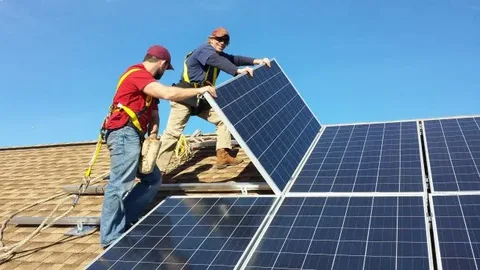
Utility bills in Manhattan Beach have been creeping up quietly for years. Southern California Edison rate increases, time-of-use pricing shifts, and rising baseline charges can add hundreds of dollars to annual household costs without homeowners noticing until tax season arrives. That is when a lot of people start searching for solar installation services near me not as an idealistic choice, but as a financial one.
This guide walks you through everything you need to know before going solar installation services in Manhattan Beach. You will learn which system types suit coastal properties, what the installation process actually looks like, what to budget, and how to choose a contractor who genuinely knows this area. No jargon, no pressure.
Why Manhattan Beach homeowners are choosing solar now
The numbers behind solar adoption in California are hard to ignore. According to California Distributed Generation Statistics (CaliforniaDGStats, 2026), the state now has 2,279,389 solar projects totaling 20,520 megawatts of installed capacity — data current through April 30, 2026. That makes California far and away the national leader in residential and commercial distributed generation.
Manhattan Beach sits within Southern California Edison’s service territory, where residential electricity rates have climbed steadily. SCE’s time-of-use billing structure means energy used during peak afternoon hours — roughly 4 to 9 p.m. — costs significantly more per kilowatt than off-peak consumption. A well-designed photovoltaic system shifts a home’s energy profile, drawing from panels during daylight and using stored or grid power outside those windows.
Local conditions also make the math work. Manhattan Beach receives strong solar irradiance through most of the year, even accounting for the marine layer that rolls in from the Pacific most mornings. Afternoon sun exposure on south- and west-facing roofs is typically long and direct. For a two-story home a few blocks from the coast, a properly sized system can offset 70 to 90 percent of annual grid consumption.
Beyond monthly savings, homeowners choosing solar installation services in Manhattan Beach are also hedging against future rate increases — and, in many cases, improving resale value in one of Southern California’s most competitive housing markets.
System types and options: what works on the South Bay coast
Not all solar systems are built the same way, and the coastal environment in Manhattan Beach adds a few variables that matter when choosing equipment. Salt air accelerates corrosion on low-grade hardware, and roof pitch varies widely across the city’s mix of flat-top modern builds and traditional pitched rooflines.
Here is a breakdown of the main system types and how they perform locally.
Standard grid-tied PV system: The most common setup. Photovoltaic panels connect through a string inverter to the home’s electrical panel and feed excess power back to SCE under net billing. No battery storage. Lower upfront cost, but no backup power during outages.
Grid-tied with battery storage: Adds a lithium battery pack most commonly a Tesla Powerwall or similar unit to the string inverter setup. The battery charges from panels during the day and provides backup power at night or during grid outages. More expensive but increasingly popular in areas with wildfire-related Public Safety Power Shutoffs.
Microinverter-based system: Instead of one central inverter, each solar panel gets its own microinverter mounted on the back of the module. This design performs better when panels face different directions or experience partial shading a real consideration on properties with trees or neighboring structures. Microinverters also make panel-level monitoring straightforward.
Building-integrated PV (BIPV): Panels that integrate into the roof surface itself, such as solar roof tiles. A smaller share of installations but growing in popularity for new builds or full roof replacements. Higher installed cost per watt but cleaner aesthetics.
Comparison table: solar system options for Manhattan Beach homeowners
| Option | Typical Installed Cost Range | Best For | Pros | Watch-Outs |
| Standard grid-tied PV | $18,000 – $28,000 (before credits) | Most homes with simple roof layout | Lowest upfront cost, proven reliability | No backup power during outages |
| Grid-tied with battery storage | $28,000 – $42,000 (before credits) | Homes in PSPS zones or with high evening usage | Outage protection, peak-rate savings | Higher cost, battery replacement after 10–15 years |
| Microinverter-based system | $20,000 – $32,000 (before credits) | Shaded roofs, multi-orientation arrays | Better output in partial shade, panel-level data | Slightly higher per-watt cost than string inverters |
| Building-integrated PV (BIPV) | $35,000 – $60,000+ (before credits) | New builds or full roof replacements | Sleek appearance, dual-purpose roofing | Higher cost, fewer certified installers locally |
Cost ranges are pre-incentive estimates for a 7–10 kW residential system. Apply the federal 30% Investment Tax Credit to reduce net cost.
The installation process: what actually happens
Many homeowners picture solar installation servcies as workers showing up with panels and mounting them in a day. The reality is more structured and that structure is worth understanding before you sign anything.
Step 1 — Site assessment and system design. A qualified installer visits your property to evaluate roof pitch, shading from trees or neighboring structures, available square footage, and your past 12 months of utility bills. They calculate the system size in kilowatts needed to meet your consumption goals. This is also where the inverter type gets decided.
Step 2 — Proposal and interconnection application. You receive a detailed proposal with system specs, projected output in kilowatt-hours per year, and estimated payback period. Simultaneously, your installer files an interconnection application with SCE, which allows the utility to review and approve the system before it connects to the grid.
Step 3 — Permitting. In Manhattan Beach, solar installations require a building permit. The city’s Community Development department handles plan review. For properties within the city’s Coastal Zone, a Coastal Development Permit may also be required unless the project qualifies for an exemption. Your installer should pull all required permits if they ask you to do it yourself, that is worth questioning.
Step 4 — Installation. Mounting hardware goes on first, secured to the roof rafters. Then the racking system, followed by the panels themselves. Wiring runs from the array to the inverter and from the inverter to the electrical panel. If battery storage is included, the battery unit installs between the inverter and the panel. A full residential installation typically takes one to three days.
Step 5 — Inspection and Permission to Operate. The city inspects the completed installation. Once it passes, SCE reviews the interconnection paperwork and issues Permission to Operate (PTO). You cannot legally run the system until PTO arrives. Most homeowners wait two to four weeks after installation for that letter.
According to the U.S. Department of Energy’s photovoltaic system design guidance, a complete PV system includes modules, mounting structures, inverters, and storage components — and inverters are expected to need replacement at least once during a 25-year array lifespan. Factoring inverter replacement into your long-term cost picture is something many sales presentations skip.
Cost factors for solar installation in Manhattan Beach
A licensed contractor working in Manhattan Beach notes that coastal properties add cost variables that inland quotes often do not reflect. Marine-grade mounting hardware, corrosion-resistant racking, and panel frames with higher salt-air ratings all cost more than standard equipment — but they significantly extend system lifespan on properties within a mile or two of the water.
Here are the main factors that move the price of solar installation services in Manhattan Beach:
- System size: Measured in kilowatts (kW). Larger homes with more consumption need more panels. Most Manhattan Beach residential installations fall between 6 and 12 kW.
- Panel efficiency: Higher-efficiency panels — typically 20 to 23 percent conversion rates — generate more power per square foot. Worth considering on smaller roofs where space is limited.
- Equipment grade: Marine-grade racking and corrosion-resistant hardware add cost upfront but reduce long-term maintenance.
- Roof condition and pitch: A roof within five years of needing replacement should probably be replaced before panels go on. A steep pitch or complex multi-facet layout increases labor time.
- Battery storage: Adds $10,000 to $15,000 to most projects, depending on the unit’s kilowatt-hour capacity.
- Permits and interconnection fees: These vary but typically run $500 to $1,500 depending on project scope.
After applying the federal Investment Tax Credit — currently 30 percent of total system cost — a typical 8 kW grid-tied system in Manhattan Beach runs roughly $18,000 to $24,000 net. That estimate assumes standard pitched-roof conditions and no battery. Systems with storage land closer to $28,000 to $35,000 after the credit.
Local companies like Express Remodeling, which focuses on residential projects across Manhattan Beach and the broader South Bay, carry experience with the local permit process, SCE interconnection requirements, and the coastal hardware specifications that general remodeling contractors often miss.
How to choose a solar installer in Manhattan Beach
The solar industry has grown fast, and not every company offering solar installation services near me has the same depth of local knowledge. Here is what to look at before signing a contract.
California CSLB license: Confirm the contractor holds an active C-46 (Solar) or C-10 (Electrical) license through the California Contractors State License Board. You can verify this online in minutes. An unlicensed installer creates real liability if something goes wrong during an inspection or a future home sale.
Local permit experience: Ask directly: how many systems have they permitted in Manhattan Beach specifically? City requirements, Coastal Zone overlap, and SCE interconnection timelines all have local nuances. An installer who primarily works in the Inland Empire may not know them.
Equipment warranties: Panels typically carry 25-year performance warranties. Inverters carry 10 to 25 years depending on manufacturer. Workmanship warranties on installation should be at least 10 years. Read the terms, not just the headline numbers.
References from coastal properties: Salt air and marine layer conditions are different from what most inland installers deal with. Ask for references from customers within a mile or two of the water.
A contractor who works specifically on residential solar in Manhattan Beach — like Express Remodeling — will have handled the city’s permit office, understands which hardware ratings hold up in coastal conditions, and carries the trade-specific insurance that general handymen and national chains often do not. That is not a small distinction when you are putting equipment on your roof for 25 years.
The city of Manhattan Beach’s environmental sustainability page confirms that going solar is popular locally and directs residents to the California Solar Initiative database to find registered installers. Cross-referencing that database with a contractor’s CSLB license is a reasonable starting point before you book a site visit
Closing
If your utility bills have been climbing and you want to understand whether solar makes sense for your specific property, the next step is a site assessment — not a sales call. Have your last 12 months of SCE bills ready, know your roof age, and ask every contractor you speak with to explain their permitting process in Manhattan Beach specifically. When you are ready to get a clear, itemized look at what a system would cost and produce on your home, reach out to Express Remodeling for a straightforward assessment. They work with Manhattan Beach homeowners regularly and can walk you through the numbers without pressure.
📍 https://maps.app.goo.gl/ioR6Xdks6astv7vC7
Frequently asked questions
Do I need a permit to install solar panels in Manhattan Beach?
Yes. A building permit is required for all residential solar installations in Manhattan Beach. Projects within the city’s Coastal Zone may also require a Coastal Development Permit, unless the specific work qualifies for an exemption under local planning rules. Your contractor should pull all required permits and handle plan submission as part of the installation agreement.
How does the marine layer in Manhattan Beach affect solar panel output?
The marine layer typically burns off by midday on most days, leaving strong afternoon sun exposure. South- and west-facing panels handle this pattern well. Annual production estimates from installers should reflect local irradiance data, not statewide California averages. A system designed for Manhattan Beach conditions will account for morning cloud cover in its output projections.
What solar panel materials hold up best near the coast?
Look for anodized aluminum racking, stainless steel fasteners, and panel frames rated for salt-air environments. Not all mounting hardware is equal. Low-grade galvanized steel corrodes faster in coastal conditions. Ask your installer specifically about the corrosion ratings of every component they plan to use.
How long does a solar installation take from start to finish in Manhattan Beach?
The physical installation takes one to three days. Permitting, SCE interconnection review, and city inspection add time on either end. Most homeowners should plan for eight to fourteen weeks from signed contract to Permission to Operate, though timelines vary depending on city workload and SCE queue.
What is net billing and how does it work with SCE?
Net billing (formerly net metering) lets you send excess solar power back to the grid and receive a credit on your SCE bill. California moved from traditional net metering to the NEM 3.0 structure in 2023, which reduced the per-kilowatt-hour export credit. Battery storage now plays a bigger role in making solar economics work under NEM 3.0 because storing energy for evening use is more valuable than exporting it.
Can solar panels withstand the wind and salt air conditions near the ocean?
Quality photovoltaic panels are rated for wind loads well above what Manhattan Beach typically experiences. The bigger concern is hardware corrosion over time. Panels from established manufacturers carry 25-year performance warranties, but the racking and fastener materials matter as much as the panels themselves for long-term coastal durability.
How much does it cost to add battery storage to an existing solar system in Manhattan Beach?
Retrofitting battery storage onto an existing grid-tied system typically costs $10,000 to $16,000 installed, depending on the battery unit’s capacity and your existing inverter compatibility. Some older string inverter systems require a partial inverter upgrade to integrate storage. Ask for a compatibility assessment before assuming a battery can simply be added.
What happens to my solar system during a grid outage?
A standard grid-tied system without battery storage shuts down automatically during a grid outage. This is a safety requirement, not a malfunction — it prevents energy from backfeeding into lines that utility workers may be servicing. Battery-backed systems can be configured to maintain power to critical circuits during an outage while disconnecting from the grid.
Does going solar in Manhattan Beach affect my property taxes?
California’s property tax exclusion for active solar energy systems means that adding solar does not increase your assessed property value for tax purposes. The exclusion applies to new construction and retrofit installations and has been in place since 1980 under Revenue and Taxation Code Section 73.
How do I find reputable solar installation services near me in the South Bay?
Start by verifying California CSLB license status for any contractor you consider. Check their permit history in Manhattan Beach specifically, ask for local references from coastal properties, and request itemized written quotes that break out equipment, labor, permits, and interconnection fees separately. Avoid any contractor who cannot clearly explain what happens between permit submission and Permission to Operate.