

If your last few electricity bills made you do a double-take, you’re not imagining things Californians now pay some of the steepest power rates in the country, hovering around 33 to 35 cents per kilowatt-hour. That single number is why so many homeowners in the San Fernando Valley are typing “who offers solar installation companies in Woodland Hills, CA” into Google and trying to figure out who they can actually trust on Express Remodeling Inc to put panels on their roof. This guide walks you through exactly that: who does the work, what it costs in 2026, how the rules have shifted, and how to tell a real professional from a fast-talking salesperson.
Solar isn’t a one-size-fits-all purchase, and Woodland Hills has its own quirks — from the utility that serves most of the area to the way our long, hot summers shape system design. So before you sign anything, let’s get you genuinely informed.
What Solar Installation Really Involves in Woodland Hills
A lot of people picture solar as “guys show up, bolt panels to the roof, done.” The panels are the visible part, but the work that determines whether your system saves you money happens long before and after that.
Solar panel installation is part construction, part electrical engineering, and part paperwork marathon. A good company treats all three with equal seriousness. The roof has to be assessed for age, pitch, and shading. The electrical panel has to be checked for capacity. And then there’s the permitting, which in the City of Los Angeles is its own small adventure.
From Rooftop Assessment to Permission to Operate
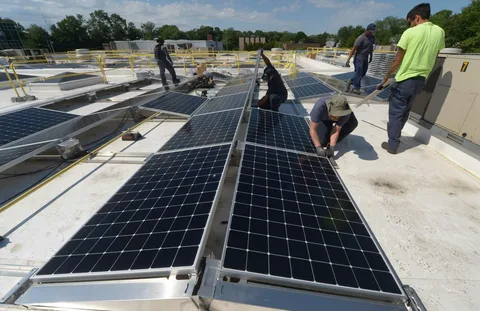
Here’s the honest sequence behind a residential solar installation. First comes a site survey, where an installer measures your roof, studies sun exposure across the seasons, and looks at your past twelve months of usage. Next is system design — sizing the array, choosing whether you need solar battery storage, and planning the solar panel mounting layout. Then permits get pulled, the crew handles the rooftop solar installation and the solar inverter installation, and finally the city inspects the work.
The last step trips people up the most. Even after the panels are physically up, you can’t legally switch the system on until your utility grants “Permission to Operate.” A sloppy company that rushes the wiring or skips solar inspection services can leave you with a beautiful array that sits dark for weeks. Experienced solar power installation crews build that timeline into their promise from day one.
Why Local Experience in the San Fernando Valley Matters
Woodland Hills bakes. Summer attic temperatures here routinely climb past what panels in cooler coastal zones ever face, and heat quietly drags down panel efficiency. Local solar installers who’ve worked dozens of Valley roofs know how to space and tilt panels so they breathe, and they know which mounting hardware survives our wind and heat cycles.
That regional knowledge is also why “home solar installation near me” tends to beat a national brand parachuting a subcontractor in. A nearby crew can come back fast for solar panel repair or a warranty visit — and that responsiveness is worth more than a slightly cheaper quote.
Who Offers Solar Installation in Woodland Hills, CA?
This is the heart of your question, so let’s answer it plainly. The companies serving this area fall into three buckets: large national installers, regional California solar companies, and local residential solar contractors — including remodeling and home-improvement firms that have expanded into solar electrical services.
Each type can do good work. The difference shows up in accountability, customization, and how reachable they are after the check clears.
National Installers vs. Local Solar Contractors
National solar power companies advertise heavily and often quote competitive upfront numbers. The tradeoff is that your project may pass through several hands — sales, a remote design team, and a local subcontractor you never met. When something goes wrong three years later, you’re navigating a call center.
Local solar panel installers and residential solar contractors work differently. The person who quotes your job is often connected to the crew that builds it. For custom solar solutions — odd roof angles, room for future solar energy upgrades, or pairing solar with a remodel — that direct line is genuinely valuable. As one industry rule of thumb puts it, you’re not just buying panels; you’re buying a 25-year relationship with whoever installs them.
What to Look For in Certified Solar Panel Installers
Reputation matters, but credentials matter more. The professional solar installation company you choose should carry a few non-negotiables.
The gold standard in the trade is NABCEP certification — the North American Board of Certified Energy Practitioners — which signals that installers have met serious training and exam requirements rather than just hanging a sign. Beyond that, the company holds an active California C-46 (solar) or C-10 (electrical) contractor’s license, carries liability insurance and workers’ comp, and offers clear written warranties on both equipment and workmanship.
A quick analogy: hiring an uncertified crew to wire a 10-kilowatt system onto your home is like letting someone without a pilot’s license fly your family. The flight might go fine. But the whole point of certification is that you’re not gambling on “might.”
The 2026 Solar Landscape: Costs, Incentives, and Net Metering
Three things changed recently, and they reshape the math for anyone shopping today. Skip this section and you risk basing a five-figure decision on outdated advice from a 2023 blog post.
What Solar Costs in Woodland Hills Right Now
As of 2026, solar in California averages somewhere between roughly $2.40 and $3.14 per watt before incentives, which puts a typical 7-to-9 kilowatt home system in the ballpark of $21,000 to $23,000 installed. Add solar battery storage — increasingly standard rather than optional — and a well-designed solar-plus-battery setup can run $35,000 or more.
Those are averages, not quotes. Your real number depends on roof complexity, panel efficiency, whether you need a main panel upgrade, and how much energy your household actually burns. This is exactly why affordable solar installation services start with a real usage analysis instead of a flat per-panel price pulled from thin air.
The Federal Tax Credit Change Every Homeowner Should Know
Here’s the big one, and a lot of installers are still quietly skating past it. The 30% federal residential solar tax credit — the Section 25D credit that defined home solar economics for two decades — ended for systems placed in service after December 31, 2025. If you’re buying and owning a system with cash or a loan in 2026, you generally do not get that 30% back from the IRS anymore.
It’s a real shift, and any “solar energy company” still promising you a 30% federal check on a 2026 cash purchase is either behind the times or hoping you are. The credit does live on in a narrower form for third-party-owned systems like leases and certain power purchase agreements through 2027, so it’s worth asking an installer to walk you through which financing path, if any, still unlocks federal value for your situation. Treat solar’s payback today as resting on electricity savings and state incentives — not a federal rebate.
LADWP vs. NEM 3.0 — A Woodland Hills Advantage
Now for some good news that’s specific to where you live. California’s three big investor-owned utilities — Edison, PG&E, and SDG&E — operate under NEM 3.0, officially the Net Billing Tariff, which slashed the credit homeowners earn for exporting surplus power to the grid by roughly 75% compared to the old rules. Under that regime, battery storage went from “nice to have” to nearly essential.
But most of Woodland Hills sits inside the City of Los Angeles, which means most homes here are served by LADWP, not Edison. And LADWP runs its own net metering program that still credits solar exports closer to full retail rate — a meaningfully better deal than the IOU customers next door. It’s the kind of local detail a generic national quote completely misses. Confirm your specific service address, because a few pockets near the city edge fall under Edison, but if you’re on LADWP, your solar power systems for residential properties may pencil out faster than you’d expect.
On top of that, California still offers the SGIP rebate toward solar battery installation and a property tax exclusion, so adding panels won’t raise your assessed home value for tax purposes. Those programs survive even with the federal credit gone.
Types of Home Solar Systems and Services
“Solar installation” covers more ground than most homeowners realize. Knowing the categories helps you have a sharper conversation when the quotes start rolling in.
Grid-Tied, Off-Grid, and Hybrid Solar Systems
Grid-tied solar systems are the most common choice for Woodland Hills homes. They stay connected to the utility, pull power at night, and feed surplus back during the day. They’re the simplest path and the cheapest upfront.
Off-grid Solar Installation services in Woodland Hills, CA cut the utility cord entirely, relying on heavy battery banks. They make sense for remote properties but rarely for a typical Valley home. Hybrid solar systems sit in between — grid-connected but with battery backup, so you keep the lights on during the rolling outages and fire-season shutoffs that Southern California knows too well. For most homeowners weighing resilience against cost, hybrid is the sweet spot in 2026.
Solar Battery Storage and Why It Now Matters
A decade ago, batteries were a luxury. Today, given how little surplus exports are worth under the new rules, solar battery storage is what lets you actually use the energy you generate instead of selling it back for pennies. A battery captures your midday production and discharges it in the evening when rates spike.
Pairing solar inverter installation with the right battery turns your roof into something closer to energy independence. Even on LADWP’s friendlier terms, a battery adds backup power that grid credits alone can’t provide.
Beyond Installation — Repairs, Maintenance, and Upgrades
Good companies don’t disappear after the panels go up. The full menu of solar electrical services includes solar panel repair, solar panel replacement when a unit fails, ongoing solar system maintenance, and periodic solar inspection services to catch issues before they cost you. Older arrays often benefit from solar energy upgrades — swapping aging inverters or adding storage to a system that predates the battery era.
If you already have panels and they’re underperforming, you don’t necessarily need a whole new array. Sometimes a maintenance visit and a fresh inverter restore most of the lost output for a fraction of replacement cost.
How to Choose the Right Solar Installation Company
You’ve got the landscape. Now here’s how to actually pick from it without getting steamrolled.
Questions to Ask Before You Sign
Treat your first meeting like an interview, because it is. Ask the company to confirm its license number and whether its installers are NABCEP-certified. Ask who, specifically, performs the work — in-house crew or subcontractor. Ask how they sized your system and request to see the usage data and shading analysis behind it.
Then get specific about the long haul: What does the workmanship warranty cover, and for how long? What happens if a panel fails in year eight? And — given the 2026 rules — ask them to explain in plain English how your savings actually work now that the federal credit has changed and what your utility’s net metering terms are. The best solar installation company will answer all of this without flinching.
Red Flags That Should Make You Pause
A few signals should slow you down. Be wary of anyone pushing a “sign today or lose the discount” close — real pricing doesn’t evaporate overnight. Be skeptical of quotes built on a flat per-panel number with no look at your bills. And walk away from anyone still dangling the expired 30% federal credit on a 2026 cash purchase, because it tells you they’re either uninformed or counting on you to be.
Trust the company that educates instead of pressures. Solar installation experts near me who explain the tradeoffs honestly — even the inconvenient ones — are the ones worth hiring.
Conclusion
So, who offers solar installation in Woodland Hills, CA? Plenty of companies do — national brands, regional firms, and trusted local residential solar contractors. The right one for you is the certified, properly licensed team that knows the Valley’s heat, understands your specific utility (LADWP for most of the area), and tells you the truth about 2026’s costs and incentives instead of selling you yesterday’s numbers.
If you’d rather work with a company that treats your home as a whole system — not just a roof to bolt panels onto — Express Remodeling Inc brings that integrated, homeowner-first approach to solar energy solutions for homes across Woodland Hills and the surrounding San Fernando Valley. Get a few quotes, ask the hard questions above, and choose the team that earns your trust before it earns your business. Your future self, holding a much smaller electric bill, will thank you.
Frequently Asked Questions
How much does solar installation cost in Woodland Hills in 2026?
Most homes land between roughly $21,000 and $23,000 before incentives for a 7-to-9 kW system, with solar-plus-battery setups running $35,000 or more. Your exact cost depends on roof complexity, energy usage, and whether you need an electrical panel upgrade.
Is the 30% federal solar tax credit still available?
No, not for homeowners buying systems with cash or a loan in 2026. The residential Section 25D credit expired for systems placed in service after December 31, 2025. A narrower version still applies to certain leases and power purchase agreements through 2027, so ask an installer which financing path fits you.
Does NEM 3.0 affect Woodland Hills homeowners?
Mostly no, and that’s good news. NEM 3.0 applies to Edison, PG&E, and SDG&E customers. Most of Woodland Hills is served by LADWP, which has its own net metering program that still credits exports closer to full retail rate. Confirm your service address, since a few areas fall under Edison.
Do I really need a battery with my solar panels?
On LADWP’s terms a battery is optional but valuable for backup power. For homes on Edison under NEM 3.0, battery storage is close to essential to capture the full value of your solar production rather than exporting it cheaply.
How long does a residential solar installation take?
The physical install often takes one to three days, but the full timeline — survey, design, permits, inspection, and Permission to Operate — usually spans several weeks to a couple of months, largely due to permitting and utility approval.