

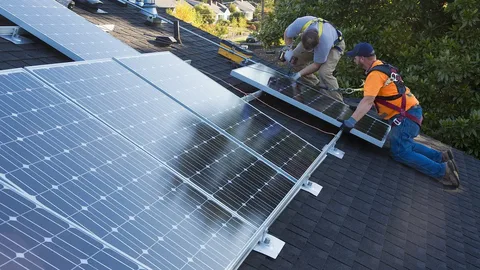
Electricity costs continue to rise across California, and many homeowners in Northridge are looking for practical ways to reduce monthly utility bills. A well-designed solar system can help lower energy costs, increase energy independence, and support long-term property value.
If you’ve searched for local solar installers or wondered whether a rooftop system makes sense for your home, you’re not alone. Northridge homeowners often ask the same questions. How much does solar cost? How long does installation take? Which panels work best in the San Fernando Valley climate?
The answers depend on your roof, energy use, and local regulations. Still, understanding the basics makes the decision much easier.
In this guide, we cover how residential solar installation works, the system options available, typical costs in Northridge, permit requirements, and what to look for when hiring a contractor. Whether you’re comparing solar energy companies near me or planning a future upgrade, this article will help you make an informed choice.
Why homeowners choose rooftop solar installation in Northridge
Many homes in Northridge receive strong sunlight throughout the year. That creates favorable conditions for solar power generation and makes solar panels a practical investment for many households.
Rising utility rates remain a major reason homeowners install solar. According to the National Renewable Energy Laboratory (NREL), residential solar adoption has expanded steadily across California due to favorable solar resources and long-term energy savings.
Property owners often choose home solar system installation for several reasons:
- Lower monthly electricity bills
- Protection against future rate increases
- Reduced dependence on the utility grid
- Potential increase in property appeal
- Compatibility with battery storage systems
A common local example involves a family with a south-facing roof near California State University, Northridge. Their summer air-conditioning costs were consistently high. After installing a properly sized solar array, they offset much of their daytime electricity use and gained more predictable energy expenses throughout the year.
Solar works for many property types. Some providers handle both residential solar installation and commercial solar installation in Northridge though system design requirements differ significantly between homes and business properties.
Solar panel installation services and system options
Solar technology has improved considerably over the last decade. Today’s systems are more efficient, more durable, and often easier to monitor through mobile apps.
Before selecting a system, ask yourself: Do you want the lowest upfront cost, maximum efficiency, or battery backup capability?
Monocrystalline panels
These panels offer high efficiency and strong performance in limited roof space.
Pros:
- High energy output
- Long lifespan
- Attractive appearance
Cons:
- Higher purchase price
Polycrystalline panels
These remain a budget-friendly option for larger roofs.
Pros:
- Lower cost
- Reliable performance
Cons:
- Lower efficiency than monocrystalline models
Solar panels with battery storage
Battery systems store excess electricity for later use.
Pros:
- Backup power during outages
- Greater energy independence
Cons:
- Higher project cost
Ground-mounted systems
Less common in Northridge neighborhoods but useful on larger lots.
Pros:
- Flexible placement
- Easier maintenance access
Cons:
- Requires available land
Comparison of common solar options
| System Type | Average Cost Range | Efficiency | Best For | Maintenance |
| Polycrystalline | Lower | Moderate | Larger roofs | Low |
| Monocrystalline | Moderate to High | High | Limited roof space | Low |
| Solar + Battery | High | High | Backup power needs | Moderate |
| Ground-Mounted Solar | Moderate to High | High | Large properties | Moderate |
How certified solar installers complete a project
Many homeowners expect solar installation to be complicated. In reality, an experienced contractor follows a structured process.
Initial site assessment
The contractor reviews:
- Roof condition
- Shading from trees or nearby structures
- Electrical panel capacity
- Historical energy consumption
This step helps determine the proper system size.
System design
Engineers create a layout that maximizes solar production while meeting local code requirements.
A licensed contractor in California often recommends designing around future needs too. Planning for an electric vehicle or home battery now can avoid upgrades later.
Permits and approvals
Northridge projects generally require permits through the local authority having jurisdiction.
California continues expanding streamlined solar permitting programs. Senate Bill 379 supports automated residential solar permitting systems across many jurisdictions.
Equipment installation
Installation crews mount racking, install panels, connect wiring, and integrate inverters.
Most residential systems take one to three days to install once permits are approved.
Inspection and utility approval
After installation, inspectors verify code compliance before utility interconnection approval.
System activation
Once approval is granted, the system begins generating electricity.
Have you checked whether your roof is nearing the end of its lifespan? Replacing an aging roof before solar installation often saves money later.
For homeowners researching solar contractors near me, companies like Express remodeling frequently coordinate permitting, installation, inspections, and utility paperwork as part of a complete project.
A useful reference for understanding solar technology is the Wikipedia article on photovoltaic systems, which explains how solar panels convert sunlight into electricity.
Cost factors for residential solar installation in Northridge
Solar pricing varies significantly between homes.
Several factors influence total project cost.
System size
Larger systems require more panels and equipment.
A typical Northridge home may need between 5 kW and 10 kW depending on electricity usage.
Roof complexity
Simple roofs cost less to work on.
Steep roofs, multiple levels, or unusual layouts can increase labor costs.
Equipment quality
Premium panels and inverters generally cost more but may improve long-term performance.
Battery storage
Adding batteries can significantly increase project costs.
Many homeowners choose batteries to gain backup power capability during outages.
Electrical upgrades
Older homes occasionally require panel upgrades before installation.
Permitting and inspection fees
Local requirements contribute modestly to total project expenses.
As a general range, many Northridge residential systems fall between $15,000 and $35,000 before incentives, depending on system size and storage options.
According to research published by NREL, policy incentives and compensation structures continue to influence homeowner adoption decisions and project economics.
For homeowners comparing “solar panel installation near me” searches, obtaining multiple detailed proposals remains one of the best ways to understand actual project costs.
Another helpful resource is the California Energy Commission’s Residential Solar Permit Program information, which explains current solar permitting initiatives and reporting requirements.
How to choose the right local provider
Selecting the installer matters just as much as selecting the equipment.
Many homeowners focus only on price. Yet installation quality often has a greater impact on long-term performance.
Look for these qualifications:
- Active California contractor licensing
- Solar-specific experience
- Manufacturer certifications
- Proof of insurance
- Local project references
- Clear warranty terms
When reviewing proposals, ask:
- How many systems have you installed locally?
- Who handles permits and inspections?
- What production estimates support your recommendation?
- What happens if the system underperforms?
Consumers searching for certified solar installers in Norwalk CA should verify credentials directly rather than relying only on advertising claims.
A specialist focused on solar work in the San Fernando Valley such as Express remodeling will typically have direct experience with local permit procedures, utility requirements, roof styles, and climate conditions. That differs from a general handyman or a national chain operating from outside the region.
Want another way to compare companies? Ask each contractor for examples of recently completed projects within a few miles of your neighborhood. Their answers often reveal how familiar they are with local conditions.
For broader guidance on residential renewable energy, the U.S. The Department of Energy’s homeowner solar resources provide useful technical information and planning advice.
Conclusion
Choosing solar starts with understanding your home’s energy needs, roof condition, and long-term goals. Once you know those factors, comparing proposals becomes much simpler. If you’d like local guidance on system sizing, permits, or equipment options, Express Remodeling can walk you through the process and help you evaluate practical solutions for your property without pressure.
A clear plan today can make future energy costs easier to manage. To learn more or discuss your options, visit: https://maps.app.goo.gl/ioR6Xdks6astv7vC7
FAQ’s
How much does residential solar installation cost in Northridge, CA?
Most residential systems in Northridge range from approximately $15,000 to $35,000 before incentives. Final pricing depends on system size, roof complexity, equipment quality, battery storage, and electrical upgrades.
How long does solar panel installation take?
Physical installation often takes one to three days. Permits, inspections, and utility approvals can extend the overall timeline to several weeks depending on local processing schedules.
Do I need permits for solar installation in Northridge?
Yes. Most residential solar projects require permits and inspections before activation. Local code requirements and utility interconnection rules must be satisfied before the system begins operating.
Can rooftop solar installation work on older homes?
Many older homes can support solar systems. Contractors may recommend roof repairs or electrical panel upgrades before installation to support long-term system performance.
How do I find reliable local solar installers?
Check licensing, insurance, references, manufacturer certifications, and local project experience. Request detailed proposals from multiple providers before making a decision.
Are batteries necessary for a home solar system installation?
No. Many systems operate effectively without batteries. Storage becomes attractive for homeowners seeking backup power or greater energy independence.
How much maintenance do solar panels require?
Solar systems require relatively little maintenance. Occasional cleaning and periodic inspections help maintain performance and identify potential issues early.
What is the lifespan of a residential solar system?
Most modern solar panels carry performance warranties of 25 years or more. Inverters and batteries may have different warranty periods depending on the manufacturer.