

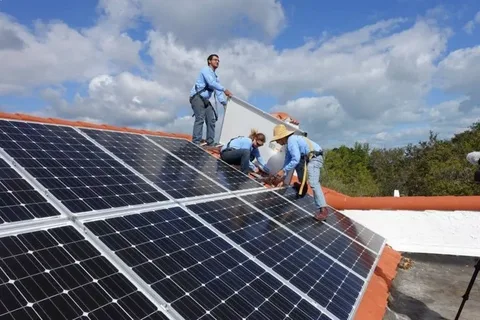
Energy bills in Northridge rarely stay the same for long. Many homeowners and business owners are looking for ways to reduce monthly costs without sacrificing comfort. Solar power has become one of the most practical options.
The difference between a solar system that performs well and one that struggles often comes down to the contractor behind the project. Professional solar contractors do much more than place panels on a roof. They assess your property’s energy use, design the right system size, manage permits, and help you avoid costly mistakes.
For residents in Northridge, solar can provide long-term savings when installed correctly. Local weather conditions, roof orientation, utility rates, and building regulations all affect the outcome. Have you ever wondered why two homes with similar roofs can see very different savings? The answer usually starts with installation quality.
Working with experienced contractors gives you a better chance of maximizing energy production and lowering lifetime ownership costs. From residential solar installation projects to large commercial systems, the right approach can make a major difference in your return on investment.
Why homeowners choose solar energy installation services
Many Northridge homeowners want more control over rising electricity costs. Solar helps reduce dependence on utility companies and creates predictable energy expenses.
According to the Solar Energy Industries Association (SEIA), solar accounted for 54% of all new electricity-generating capacity added in the United States during 2025. That growth reflects increasing consumer demand for lower-cost energy solutions.
A qualified solar installation company starts by evaluating your current electricity usage. Instead of guessing, they review utility bills and calculate expected production levels.
Several benefits drive homeowner interest:
- Lower monthly electricity bills
- Potential property value increases
- Reduced exposure to future utility rate hikes
- Cleaner energy production
- Tax incentives and available programs
Research published in Renewable Energy found that homes with photovoltaic systems sold for roughly 5% more on average in the studied market. That translated into an increase of about $35,000 in home value. (Renewable Energy Journal, 2016)
Business owners see similar advantages. Commercial solar installation in Northridge projects can offset large daytime energy loads, which often represent the highest electricity expenses.
Solar system options and their money-saving potential
Every property has different energy needs. A good contractor recommends a system based on your goals rather than selling the largest system available.
Grid-tied systems
Grid-tied systems remain the most common choice in Northridge. They connect directly to the utility network and allow owners to offset electricity usage.
Pros:
- Lower installation costs
- Proven technology
- Strong return on investment
Cons:
- Limited operation during outages without battery backup
Solar plus battery storage
Battery systems store excess energy for later use.
Pros:
- Backup power during outages
- Greater energy independence
Cons:
- Higher upfront costs
Residential rooftop systems
Rooftop solar installation works well for most single-family homes.
Pros:
- Uses existing roof space
- Reduces monthly utility expenses
Cons:
- Roof condition must support installation
Commercial solar arrays
Businesses often install larger systems on roofs or parking structures.
Pros:
- Large-scale savings
- Potential tax advantages
Cons:
- Higher project complexity
| System Type | Avg. Cost Range | Best For | Savings Potential | Maintenance |
| Grid-Tied Solar | $15,000-$30,000 | Homes | High | Low |
| Solar + Battery | $25,000-$45,000 | Homes needing backup power | High | Moderate |
| Rooftop Commercial | $50,000-$500,000+ | Businesses | Very High | Moderate |
| Ground-Mount Solar | $20,000-$60,000+ | Large properties | High | Low |
What solar panel installers actually do during the project
Many people assume installation begins with mounting panels. The process starts much earlier.
First, certified solar installers perform a site assessment. They examine roof condition, shading patterns, electrical systems, and structural capacity.
Next comes system design. Contractors determine:
- Panel placement in Norwalk CA
- Inverter selection
- Production estimates
- Electrical integration requirements
- Future energy needs
After design approval, permit applications begin. In Los Angeles, solar projects typically require review by the Los Angeles Department of Building and Safety. Local codes and electrical standards must be met before installation proceeds.
A licensed contractor in California often points out that permit errors create some of the most expensive delays in solar projects. Experienced contractors know the approval process and help avoid those setbacks.
Installation usually includes:
- Roof preparation
- Mounting system installation
- Panel placement
- Electrical connections
- System testing
- Final inspection
For example, a Northridge homeowner with a south-facing roof and afternoon air-conditioning demand may benefit from panel placement that maximizes peak production hours. Small design adjustments can increase annual output and reduce utility costs.
Local companies such as Express remodeling often work with homeowners who need guidance through permitting, system sizing, and installation planning. Local experience can help avoid delays tied to municipal requirements.
What affects the cost of solar installation in Northridge?
Solar pricing varies widely because every property is different.
Roof size influences system capacity. Larger energy needs require more panels, increasing project costs.
Roof condition matters too. Older roofs may need repairs before installation begins. Would you want to install a solar system designed to last decades on a roof nearing replacement age?
Key cost factors include:
- System size
- Equipment quality
- Roof complexity
- Battery storage additions
- Permit fees
- Electrical upgrades
- Labor costs
Premium equipment typically costs more upfront but may produce better long-term savings.
Battery storage remains one of the largest cost additions. Many homeowners choose batteries for resilience and energy independence rather than direct financial savings alone.
Federal incentives can reduce project costs. Information about renewable energy incentives can be reviewed through the U.S. Department of Energy solar energy resources.
Energy efficiency improvements often increase solar performance too. Guidance on reducing household energy consumption can be found through ENERGY STAR home energy recommendations.
Choosing the right local solar installers
The contractor you select has a direct impact on system performance and lifetime savings.
Start by confirming licensing, insurance, and experience. Ask how many systems the company has completed in the local area.
Questions worth asking include:
- Who handles permits?
- What warranties are included?
- What production estimates are provided?
- How is post-installation support handled?
- What financing options exist?
Look for contractors who explain system design decisions clearly. If a proposal seems unusually cheap, ask what equipment or services were removed.
A contractor focused on solar work in Northridge such as Express remodeling often understands local permitting requirements, utility processes, roof styles, and climate conditions better than a general handyman or a national chain working from a remote office.
Another useful resource is the National Renewable Energy Laboratory solar research, which provides information about system performance and solar technologies.
Ask yourself one question before signing any contract: does the contractor seem focused on your energy goals, or only on closing the sale?
Many of the highest-performing systems come from careful planning rather than expensive equipment alone.
Solar works best when design, installation quality, and local knowledge come together.
Conclusion
If you are considering solar for your home or business, take time to compare proposals, review production estimates, and understand your long-term goals. A conversation with Express remodeling can help clarify available options, expected savings, and system choices that fit your property. The right information at the start often leads to better financial results for years to come.
FAQ’s
How much money can solar panels save in Northridge?
Savings vary based on electricity usage, system size, utility rates, and roof conditions. Many homeowners reduce a large portion of their monthly electricity expenses. A properly designed system can generate savings for decades after installation.
How long does residential solar installation take?
Most residential projects take one to three days for physical installation. Permitting, approvals, and inspections can add several weeks before the system becomes operational.
Do professional solar contractors handle permits?
Yes. Most experienced contractors manage permit applications, inspections, and utility coordination. This helps reduce delays and paperwork errors.
What is the average cost of solar installation in Northridge?
Many residential systems fall between $15,000 and $30,000 before incentives. Battery storage, larger systems, and premium equipment can increase costs.
Are solar batteries worth the extra expense?
Battery storage provides backup power and greater energy independence. Financial returns vary based on energy usage patterns and local utility programs.
Can commercial solar installation reduce operating costs?
Yes. Businesses often offset substantial daytime electricity consumption. Savings can be significant for facilities with high energy demand.
Do local solar installers understand Northridge permit requirements?
Local contractors frequently work with regional building departments and inspection processes. Their familiarity with local requirements can simplify project approvals.
How long do rooftop solar installation systems last?
Most solar panels carry performance warranties of 25 years or longer. Many systems continue producing electricity beyond that period with routine maintenance.