

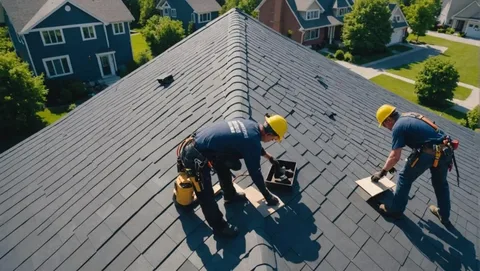
Roofing costs have been climbing steadily across Southern California, and Manhattan Beach is no exception. Labor rates, material prices, and permit requirements all add up faster than most homeowners expect. If your roof is aging, showing wear, or simply overdue for an inspection, acting before another seasonal storm rolls in from the Pacific is the smarter financial move.
This guide covers everything you need to make a well-informed decision. You will learn which roofing materials in Manhattan Beach perform best on the coast, what the installation process actually involves, what to budget for a project in this area, and which questions to ask before signing anything. Whether you are dealing with a leak, planning a full replacement, or searching for roofing services near me after a rough storm season, the answers are here.
Why Manhattan Beach homeowners are replacing roofs now
The timing matters more than people realize. Roofing material and labor costs have risen sharply since 2020, and supply chain pressure on quality underlayment, flashing, and sheathing products has not fully eased. A roof replacement that cost $18,000 three years ago may run $23,000 to $28,000 today for the same scope.
Beyond cost, Manhattan Beach’s coastal environment accelerates wear. Salt air attacks fasteners, flashing joints, and low-grade metal components faster than inland conditions. The marine layer brings consistent moisture, and south-facing slopes take direct afternoon sun exposure that degrades organic materials over time. Add occasional Santa Ana winds, and you have a roof environment that demands quality materials and proper installation.
According to the National Roofing Contractors Association (NRCA), all roofs require periodic inspection and maintenance to reach maximum service life. Their guidance recommends inspecting at least twice yearly — in spring and fall — and after any severe storm. Most homeowners in Manhattan Beach skip this entirely until a leak forces the issue.
Waiting costs more. Minor flashing failures and lifted shingles turn into water intrusion, rot in the roof deck, and damaged sheathing. Catching those issues at the inspection stage keeps a simple repair from becoming a full replacement.
Roofing material options and what suits the South Bay coast
Choosing the right material for a coastal property is not about aesthetics alone. Salt air, wind uplift potential, and the demands of California’s Title 24 energy code all push the decision.
Asphalt shingles: The most common residential option. Modern architectural shingles carry 30- to 50-year manufacturer warranties and cost significantly less than tile or metal. Quality matters on the coast — look for shingles with algae-resistant granules and Class 4 impact ratings. Standard three-tab shingles are not suitable for coastal exposure.
Concrete and clay tile: Both are strong performers in Southern California. Clay tile is lighter, highly durable, and carries strong salt-air resistance. Concrete tile costs less upfront but weighs more, which means roof deck structural capacity needs to be confirmed before installation. Both options require proper underlayment — typically two layers — and correct ridge vent integration to prevent heat buildup.
Standing seam metal roofing: A growing choice for flat and low-slope roofs in Manhattan Beach. Correctly coated steel or aluminum panels reflect heat, shed water cleanly, and handle wind uplift well when installed with proper fasteners and clips. The U.S. Department of Energy notes that reflective cool roofs can stay more than 50°F cooler than conventional roofs under the same conditions, with conventional roofs reaching 150°F or more on sunny afternoons. For homes with air conditioning loads, that temperature difference translates directly into energy savings.
Modified bitumen / flat roof systems: Common on modern flat-roof designs throughout Manhattan Beach. These use multi-layer waterproofing membranes with high puncture resistance. Maintenance access and proper drainage are the key long-term concerns.
Roofing material comparison for Manhattan Beach properties
| Material | Typical Installed Cost (per sq ft) | Best For | Salt-Air Rating | Key Watch-Out |
| Architectural asphalt shingles | $5 – $9 | Pitched roofs, budget-conscious replacements | Moderate (coating-dependent) | Choose algae-resistant, Class 4 rated products |
| Clay tile | $12 – $20 | Traditional pitched roofs, long-term durability | High | Requires structural check for deck load capacity |
| Concrete tile | $9 – $15 | Mid-budget pitched roofs | High | Heavier than clay; check rafter capacity |
| Standing seam metal | $14 – $22 | Low-slope, flat, modern builds | Very high (with proper coating) | Higher upfront cost; specialist installer needed |
| Modified bitumen (flat) | $6 – $12 | Flat or low-pitch roofs | High | Drainage design is critical; regular inspection needed |
Cost ranges reflect installed pricing in the Manhattan Beach market and are pre-incentive estimates for a standard residential replacement.
The roofing process: what happens from start to finish
Many homeowners picture a crew showing up with shingles and finishing in a day. Larger projects have more steps, and understanding them helps you hold contractors accountable and avoid surprises.
Step 1 — Inspection and scope assessment. A qualified roofer walks the best roofing services checks the attic for signs of water intrusion and deck damage, evaluates flashing at chimneys, skylights, and wall intersections, and notes the condition of the ridge vent and drip edge. This drives the project scope — repair, partial replacement, or full tear-off.
Step 2 — Permitting. Re-roofing in Manhattan Beach requires a building permit. The City of Manhattan Beach Building and Safety department confirms that re-roofing falls under permit requirements, and as of January 1, 2026, all plans submitted to the city are subject to the 2025 California Building Codes. Your contractor should pull the permit before any work begins. If they suggest skipping it, walk away.
Step 3 — Tear-off and deck inspection. On a full replacement, the existing material comes off first. The roof deck gets inspected for soft spots, rot, and damaged sheathing. Any compromised sections need replacement before new material goes down. Skipping this step is one of the most common ways roofing projects fail within five years.
Step 4 — Underlayment, flashing, and drip edge. Quality underlayment goes down over the clean deck. Flashing gets installed or replaced at all penetrations and transitions. Drip edge goes along rakes and eaves. This layered waterproofing system is what actually keeps water out — the surface material is the last line of defense, not the first.
Step 5 — Surface material installation. Shingles, tile, metal panels, or membrane go on according to manufacturer specifications and local code. Fastener type and spacing matter more than most homeowners know. Research from the Insurance Institute for Business and Home Safety (IBHS) shows that switching from standard smooth nails to 8D ring-shank nails and reducing spacing can double a roof’s uplift resistance — a relevant consideration in a coastal area with wind exposure. Sealing roof deck seams has been shown by IBHS FORTIFIED research to reduce water intrusion by up to 95 percent when roof covering is compromised.
Step 6 — Inspection and sign-off. The city inspector reviews the completed work. A permit that closes with a passing inspection protects you at resale. An unpermitted re-roof creates problems when you sell.
Local residential contractors like Express Remodeling handle Manhattan Beach permit submissions regularly, which means they know the city’s plan check process, understand which code updates took effect in 2026, and carry the documentation the city requires before issuing a permit.
Cost factors for roofing services in Manhattan Beach
A licensed roofing contractor working in Manhattan Beach notes that coastal jobs consistently cost more than comparable inland work. Here is what drives the difference.
Roof size and pitch: Measured in roofing squares (one square equals 100 square feet). Steeper pitches add labor time and require safety equipment. Most Manhattan Beach residential roofs run 20 to 40 squares.
Tear-off layers: California code limits the number of layers allowed before a full tear-off is required. Tear-off adds labor and disposal cost. Under Manhattan Beach’s Construction and Demolition Waste Management Program, qualifying projects must recycle at least 65 percent of waste — your contractor needs a plan for this and the documentation to prove compliance.
Deck condition: Damaged sheathing adds material and labor cost. A full inspection before work begins gives you an accurate project total — any contractor quoting without looking at the deck is guessing.
Material grade: The difference between a standard 30-year shingle and a Class 4 impact-rated architectural shingle runs $1.50 to $2.50 per square foot. On a 30-square roof, that is $4,500 to $7,500. For a coastal property, the upgrade is usually worth it.
Coastal hardware specifications: Stainless steel or hot-dipped galvanized fasteners, corrosion-resistant flashing metal, and drip edge rated for salt-air exposure all add cost compared to standard hardware. Skipping these on a coastal property shortens the roof’s actual lifespan.
For a standard 25-square residential re-roof in Manhattan Beach, budget $18,000 to $32,000 depending on material, deck condition, and access. Flat-roof membrane projects tend to run $12,000 to $20,000 for similar square footage.
How to choose the right roofing contractor in Manhattan Beach
The South Bay has no shortage of contractors offering competitive quotes. Sorting the qualified ones from the rest takes a few specific checks.
California CSLB license verification: Confirm the contractor holds an active C-39 Roofing license through the California Contractors State License Board. You can check this online in minutes. An unlicensed contractor creates liability that falls on you as the homeowner.
Local permit track record: Ask directly how many permits they have pulled in Manhattan Beach. The city’s plan check process and the 2025 code requirements are things a contractor learns through repetition, not theory.
Written itemized quotes: Any quote that bundles everything into one number — materials, labor, tear-off, permits, disposal — makes it impossible to compare contractors fairly. Ask for line-item breakdowns.
Coastal material specifications: Request the manufacturer name and spec sheet for every component: shingles or tile, underlayment, flashing metal, fasteners, and drip edge. If a contractor cannot produce these on request, that tells you something.
A contractor who works specifically on residential roofing in Manhattan Beach — like Express Remodeling — handles the coastal hardware requirements, understands the city permit office, and carries trade-specific roofing insurance that general handymen and national franchise chains often do not hold. That distinction matters when something goes wrong mid-project or at the final inspection.
Conclusion
Roofing in Manhattan Beach involves more variables than most homeowners initially expect coastal hardware specs, city permit requirements, updated building codes, and material performance differences that only matter in salt-air environments. Getting ahead of any existing wear, understanding your material options, and working with a contractor who knows this area’s specific requirements is what separates a smooth project from a costly one. The information in this guide gives you a solid foundation to evaluate quotes, ask the right questions, and make a decision that protects your home for the next 20 to 30 years.
📍 https://maps.app.goo.gl/ioR6Xdks6astv7vC7
Frequently asked questions
Do I need a permit to replace my roof in Manhattan Beach?
Yes. The City of Manhattan Beach requires a building permit for re-roofing work. As of January 1, 2026, plans are reviewed under the 2025 California Building Codes. Your contractor should submit for and receive the permit before any work starts. An unpermitted roof replacement can create problems during a home sale and may require remediation at your expense.
How much does a full roof replacement cost in Manhattan Beach?
Most residential replacements in Manhattan Beach run $18,000 to $32,000 for asphalt shingles or tile on a 25-square pitched roof, depending on material grade, deck condition, and access complexity. Flat-roof membrane systems on similar square footage typically cost $12,000 to $20,000. Get at least three itemized written quotes before committing.
What roofing material holds up best near the beach in Manhattan Beach?
Clay tile and properly coated standing seam metal both perform well in coastal salt-air conditions. High-grade architectural asphalt shingles with algae-resistant granules and Class 4 ratings are a solid mid-range option. Avoid standard three-tab shingles and low-grade metal flashing in coastal areas — both degrade faster than inland equivalents and raise long-term maintenance costs.
How long does a roofing project take in Manhattan Beach from start to finish?
Physical installation on a standard residential replacement takes two to four days. Permitting, plan check, and inspection scheduling add time on both ends. A realistic timeline from signed contract to final city inspection is three to six weeks, depending on city workload and material availability.
How often should I inspect my roof in Manhattan Beach?
The National Roofing Contractors Association recommends inspection at least twice per year — in spring and fall — and after any severe storm event. Coastal properties benefit from a third inspection after a significant Santa Ana wind event. Regular inspection catches minor flashing gaps and lifted fasteners before they become leaks.
What does the roofing permit process look like in Manhattan Beach?
Your contractor submits plans to the city’s Community Development Building and Safety division, either online through the Citizen Self Service portal or in person. The city conducts a plan check against the 2025 California Building Codes. Once approved, the permit issues, work proceeds, and the city inspector performs a final inspection before the permit closes.
Can I re-roof over my existing shingles in Manhattan Beach?
California building code allows one layer of overlay in some situations, but this depends on the condition of the existing material and the city’s review. Most licensed contractors in Manhattan Beach recommend a full tear-off so the deck can be properly inspected. Overlaying hides potential deck damage and may void material warranties.
What is underlayment and why does it matter for coastal properties?
Underlayment is the waterproof membrane installed between the roof deck and the surface material. On coastal properties, it acts as the primary water barrier if surface material is compromised by wind, salt corrosion, or age. Quality synthetic underlayment outperforms felt paper in high-humidity coastal environments. Two-layer underlayment is standard for tile roofs in California.
How do cool roofs help Manhattan Beach homeowners reduce energy costs?
Reflective cool roofs reduce surface temperature by reflecting rather than absorbing sunlight. The U.S. Department of Energy notes that conventional roofs can reach 150°F or more on a sunny afternoon, while a reflective roof under the same conditions can stay more than 50°F cooler. In a home relying on air conditioning through a long Southern California summer, that temperature difference reduces cooling load and lowers energy bills.